

Estimated Read Time: 12-13 Minutes
Facing a legal challenge in Oklahoma does not mean your career in the skies is over. Instead, think of it as the moment when a precise and powerful defense begins. By leveraging the law’s specific protections, you will have a clear, proven roadmap to safeguard your livelihood and your passion for flight. This approach is built on the firm belief that every pilot deserves a defense as rigorous and detail-oriented as the pre-flight checks they perform every day. This is not merely a response to a charge. It is a proactive deployment of a sophisticated strategy, from challenging technical scientific data to utilizing career-saving agreements, to ensure that your future remains firmly in your control.
Key Takeaways
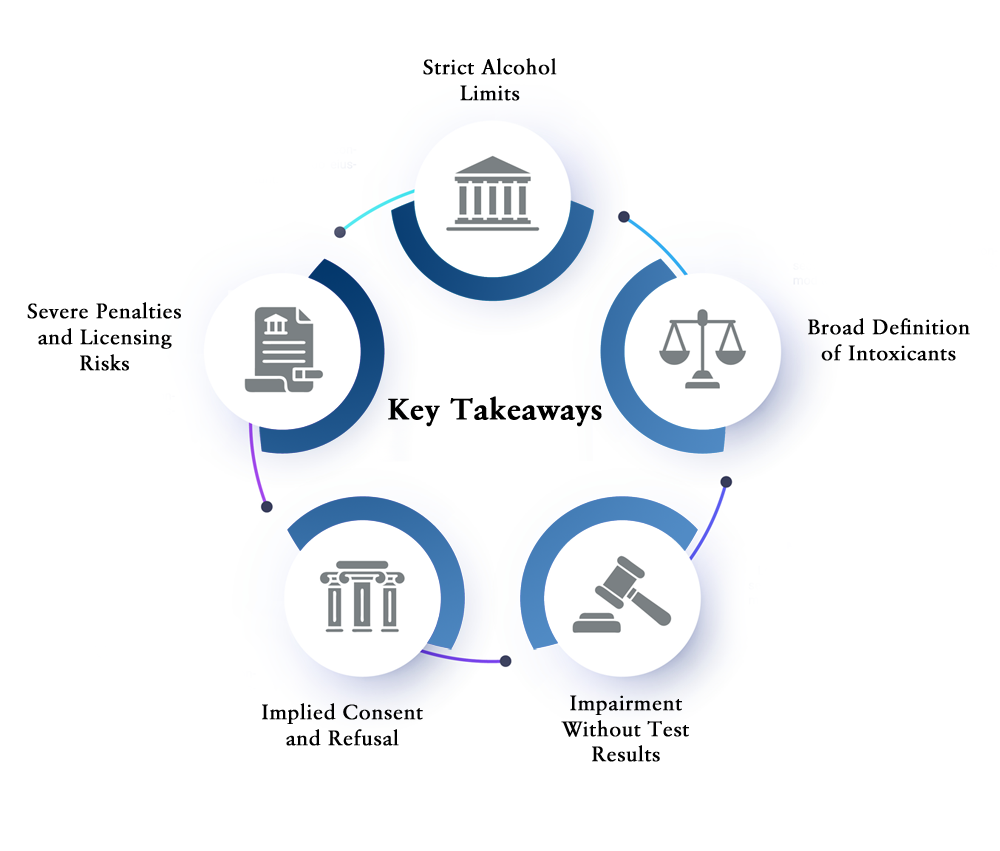
Strict Alcohol Limits: Oklahoma enforces a per se alcohol limit of 0.04% for pilots, which is exactly half of the 0.08% limit required for drivers.
Broad Definition of Intoxicants: The law covers more than just alcohol. It also includes illegal drugs, prescription medications, and even over-the-counter medicines if they compromise your ability to fly safely.
Impairment Without Test Results: You can be charged based on visible impairment, such as slurred speech or poor balance, even if your breath or blood alcohol level is below the 0.04% mark.
Implied Consent and Refusal: By operating an aircraft in the state, you give implied consent to chemical testing, and refusing such a test can be used as evidence against you in court.
Severe Penalties and Licensing Risks: A first-time offense is a misdemeanor that can lead to a year in jail, and because of proximity to a major FAA center, state violations almost always result in the loss of a federal pilot’s license.
Flying Under the Influence
In Oklahoma, the official legal term for flying under the influence is operation of an aircraft under the influence of intoxicants. This law covers more than just alcohol. It includes illegal drugs, prescription medications, and even over-the-counter medicines if they affect your ability to fly safely. There are two ways the state can prove someone is under the influence. First, there is a per se rule, which means if a breath or blood test shows an alcohol concentration of 0.04% or higher within two hours of an arrest, the pilot is automatically considered under the influence. This limit is much stricter than the 0.08% limit for drivers. Second, a pilot can be charged if they are visibly impaired by any substance, even if their alcohol level is below the 0.04% mark.
A first-time offense is a misdemeanor that carries a jail sentence of 10 days to one year and a fine of up to $1,000.00. If someone is caught again within ten years, it becomes a felony. Additionally, the court may require a substance abuse evaluation and can order the person into a treatment program as part of their sentence.
Finally, Oklahoma uses a rule called implied consent. This means that by choosing to fly a plane in Oklahoma, you have already agreed to take a chemical test if an officer has a good reason to believe you are under the influence. If you refuse the test, that refusal can be used as evidence against you in court.
Definitions of Influence
The definition of being under the influence while flying is much broader than it is for driving a car. There are two main ways the law decides if a pilot is impaired. The first way is a simple numbers test: if a pilot has a blood or breath alcohol level of 0.04% or higher within two hours of being arrested, they are legally considered under the influence. This is known as a per se rule, meaning the state doesn’t have to prove the pilot was acting drunk since the measurement alone is enough to lead to a conviction. This 0.04% limit is exactly half of the 0.08% limit used for drivers in Oklahoma, reflecting the higher safety standards required for aviation.
The second way the law defines being under the influence is based on a pilot’s actual behavior and physical state, regardless of their test results. Under this standard, a pilot is breaking the law if they are affected by any intoxicant, which includes alcohol, illegal drugs, prescription medications, or even over-the-counter medicines, to the point that they cannot fly safely. This means that even if a pilot’s alcohol level is below 0.04%, they can still be arrested if an officer observes slurred speech, poor balance, or erratic behavior. The law also accounts for combinations of substances, such as taking a legal allergy medication that makes you drowsy and having one small drink. If the mix makes you unsafe to operate the plane, you are legally under the influence.
To prove a case without a high alcohol test result, Oklahoma authorities rely on physical signs like glassy eyes or the smell of alcohol, as well as poor coordination while taxiing or performing pre-flight checks. Essentially, the state’s goal is to ensure that no substance of any kind has compromised a pilot’s mental or physical faculties. These definitions are strictly enforced, and any pilot found to be under the influence faces the immediate risk of losing their federal pilot’s certificate in addition to state criminal penalties.
The Definition of Operating
The definition of operating an aircraft is purposefully broad to ensure that a pilot can be stopped before an impaired flight ever leaves the ground. You are legally operating the plane if you do anything that involves using the aircraft’s controls or systems. This includes moving any levers, turning on the engine, or engaging the brakes. The law is written this way so that an officer can intervene the moment an impaired person sits in the pilot’s seat and begins preparing for a flight, rather than waiting until the plane is actually moving or in the air.
Essentially, you don’t have to be flying to be considered operating. If you are under the influence and you start the engine, release the parking brake, or even just manipulate the navigation tools with the intent to fly, you are breaking the law. This is very similar to Oklahoma’s actual physical control laws for cars, where you can be arrested for a DUI just for sitting in the driver’s seat with the keys. Because even a stationary plane with an engine running or with brakes released is considered a danger, the state considers these early actions the start of the operation.
Federal rules add another layer to this definition. While Oklahoma focuses on the physical act of touching the controls, the FAA looks at operational control, which is the responsibility for starting or directing a flight. This means that if you are the person in charge of the flight, the pilot in command, and you are intoxicated, you can be held liable even if you aren’t the one physically steering at that exact second. Between these state and federal rules, the law ensures that anyone who has control over an aircraft must be completely sober from the moment they step into the cockpit to begin their pre-flight duties.
Implied Consent
Implied consent is essentially a legal agreement you make with the state the moment you operate an aircraft. By simply using Oklahoma’s airspace or airports, you have already consented to take a breath, blood, or urine test if a law enforcement officer has a good reason to believe you are flying under the influence. This rule is designed to ensure that pilots are held accountable for their sobriety, as the state views flying as a privilege rather than an absolute right. For this law to take effect, the officer must first arrest you and have a reasonable belief that you were operating the plane under the influence.
The testing process is very specific. Usually, the officer decides which test you must take, most commonly a breath test for alcohol or a blood test for drugs. If you are unconscious or otherwise unable to speak following an accident, the law assumes you still give your consent, and the medical staff can perform the test anyway. While you do have the physical right to refuse a test, doing so carries heavy penalties. If you say no, that refusal can be used as evidence against you in a criminal trial to suggest you were trying to hide your intoxication.
The most severe consequence of refusing a test often comes from the federal level rather than from the state level. Because the FAA center is located in Oklahoma City, any refusal is quickly reported to federal authorities. Under FAA rules, refusing a sobriety test is often treated the same as failing one, and it can lead to the immediate and emergency revocation of your pilot’s license. In short, while you can technically refuse the test, the legal system is set up so that you will likely lose your wings and still face criminal charges in an Oklahoma court.
Testing Processes
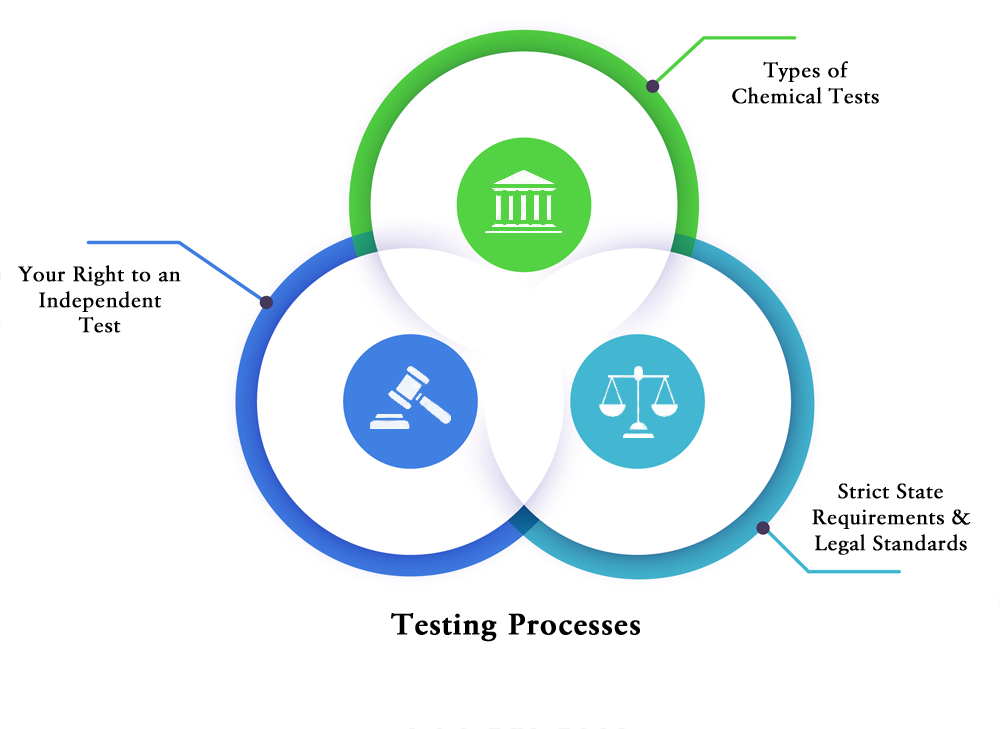
The testing process for determining whether someone is flying under the influence is a strict procedure. Once a pilot is arrested based on reasonable suspicion of impairment, the law enforcement agency decides whether to test the pilot’s breath, blood, or urine. If the officer doesn’t pick a specific method, the law defaults to a breath test for alcohol. However, if the pilot is injured or a breathalyzer isn’t available, they will often use a blood test instead. If the officer suspects the pilot is on drugs, they will almost always require a blood sample to find any other intoxicant.
To ensure the results are reliable enough to be used in court, the state must follow several strict rules. Most importantly, the sample must be collected within two hours of the arrest. Additionally, blood can only be drawn by qualified medical professionals, such as doctors or nurses. The tests themselves must be performed using methods and machines approved by the Oklahoma Board of Tests. In court, a result of 0.04% or higher is considered prima facie evidence, which is a legal term meaning the number alone is enough to prove the pilot was under the influence unless they can prove the test was wrong. On the other hand, a result below 0.04% is considered evidence that the pilot was sober.
Oklahoma law also gives pilots a special protection: the right to a second opinion. If you agree to the state’s test, you can then ask for your own independent test by a doctor of your choice, though you have to pay for it yourself. The state is even required to give you enough of the sample so your own expert can test the exact same material. This system of checks and balances is intended to protect pilots from faulty equipment while ensuring that Oklahoma aviation maintains its high safety standards.
Blood Sample Requirements
The strict procedures for collecting, labeling, and storing blood samples are a central focus for criminal defense attorneys because any deviation from these rules can make the evidence unreliable or inadmissible in court. The state must prove that the blood was handled perfectly to ensure the alcohol or drug levels reported by the lab are actually what was in the pilot’s system at the time of the flight. Your attorney will look for procedural errors, such as whether the medical professional used an alcohol-based wipe to clean the skin, which could accidentally inflate the test results, or whether the vials containing necessary preservatives were expired. If an attorney can show that the chain of custody was broken or that the sample was left in a hot car instead of being refrigerated, they can argue that the blood may have fermented and produced fake alcohol, potentially leading a judge to throw out the test results entirely.
Furthermore, these technical standards provide a defense attorney with the tools to double-check the state’s work. The state is required to keep a retained backup sample for 60 days, which an attorney can have sent to an independent, Board-approved lab for a second opinion. By examining the laboratory’s data and the officer’s sworn affidavits, a skilled defense lawyer can look for gaps in documentation or calibration errors in the testing machines. For a pilot facing a life-changing felony charge, these simple technicalities are often the strongest line of defense.
8-Hour Rule
The 8-hour rule is a strict federal safety standard that works alongside Oklahoma’s state laws to keep impaired pilots out of the sky. While Oklahoma’s main flying under the influence law focuses on whether your blood alcohol level is 0.04% or if you are visibly stumbling, the federal rule is much simpler: you cannot act as a crewmember within eight hours of consuming any alcohol. It does not matter if you feel completely sober or if a breathalyzer shows a 0.00% reading; if you had a drink seven hours before stepping into the cockpit, you have technically violated the law. This rule acts as a mandatory waiting period to ensure that alcohol has enough time to leave a pilot’s system before they begin their pre-flight duties.
This eight-hour window is a critical detail because it often provides the reasonable grounds that an officer needs to make an arrest. If a pilot admits to having a glass of wine four hours ago, an Oklahoma officer can use that admission to justify a mandatory blood or breath test, even if the pilot isn’t acting drunk. Furthermore, defense lawyers must warn their clients that the eight-hour rule is only a minimum requirement. If a person drank heavily and still has a blood alcohol level above 0.04% ten hours later, they can still be charged with a crime in Oklahoma. Even a bad hangover that causes dizziness or slow reaction times can be legally classified as being under the influence if it makes flying unsafe. Even if an Oklahoma prosecutor decides to drop the criminal charges, the FAA can still proceed with an independent investigation to revoke a pilot’s license solely for the violation.
FAA Regulations
The intersection of state flying laws and federal FAA regulations creates a dual-track system in which a pilot is accountable to two authorities at the same time. While Oklahoma handles the criminal side of things, such as jail time and fines, the FAA handles your actual pilot’s certificate and your medical eligibility.
The most important overlap between these two systems is the mandatory reporting rule. Under federal law, any motor vehicle action, which includes a DUI in your car or a driver’s license suspension, must be reported to the FAA in Oklahoma City within 60 days. Some pilots mistakenly believe they only have to report it if they are convicted, but the FAA actually requires a report for the license suspension itself. This often leads to the two-report trap, where a pilot must send one letter when their driver’s license is taken away and a second letter later if they are convicted in court. Failing to send these letters to the Civil Aviation Security Division is often a bigger threat to a pilot’s career than the original DUI, as the FAA can revoke a pilot’s license just for the failure to report.
Finally, these laws intersect at your regular medical exams. When you fill out your medical documentation, you are required to disclose any alcohol-related arrests, even if the charges were eventually dropped in an Oklahoma court. If the FAA sees a high blood alcohol level or a test refusal in your state records, their medical branch will often put your medical certificate on hold until you undergo a specialized substance abuse evaluation. Essentially, the state of Oklahoma punishes the act of flying under the influence, but the FAA uses those state records to decide if you are still medically fit to be a pilot at all.
FAQs
What is the legal alcohol limit for a pilot in Oklahoma? Under Oklahoma law, the legal limit for operating an aircraft is 0.04%, which is significantly stricter than the 0.08% limit used for driving a car.
Do I have to report an FUI arrest to the FAA even if I haven’t been convicted yet? Yes, you must provide a written report to the FAA Civil Aviation Security Division within 60 days of any motor vehicle action, including a driver’s license suspension.
Can I still fly while my Oklahoma criminal case is pending? While your state court case is ongoing, your ability to fly depends on whether the FAA has issued an emergency revocation of your certificates or if your medical certificate has been deferred.
Will a deferred sentence protect my pilot’s license? A deferred sentence prevents a permanent judgment of guilt, which is vital for your record, but you are still required to disclose the underlying arrest and the court’s requirements to the FAA.
What happens if I refuse to take a breath or blood test at the airport? Under Oklahoma’s implied consent laws, refusing a test results in an immediate revocation of your operating privileges and can be used as evidence against you in a criminal trial.
Consequences to Your Pilot’s License
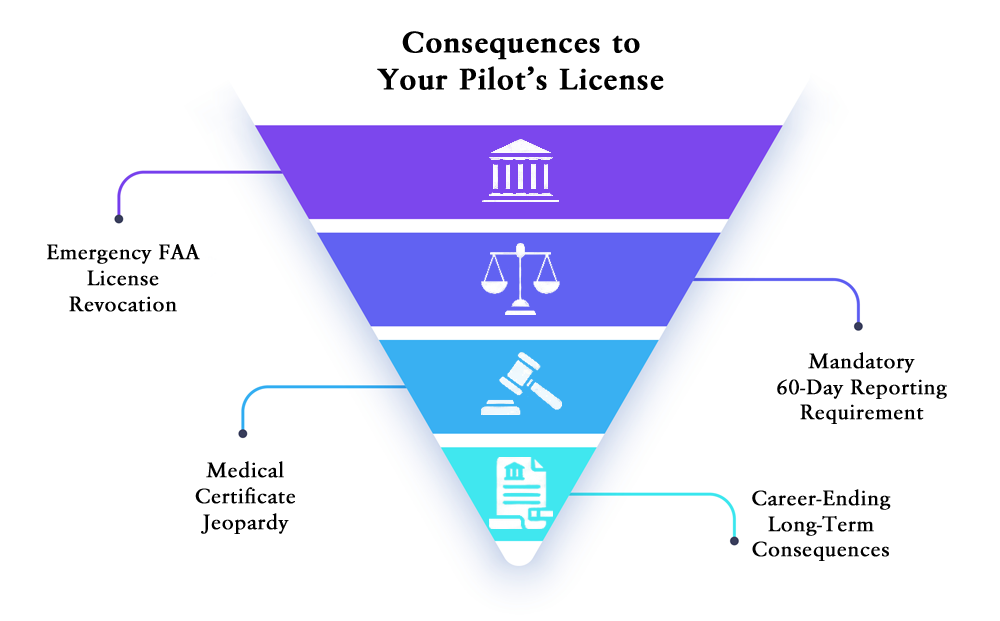
If you are convicted of flying under the influence in Oklahoma, your pilot’s license faces immediate and severe consequences from the federal government. The FAA has the power to issue an emergency revocation of all your pilot certificates. This isn’t just a temporary suspension, it can completely cancel your license. Typically, you are barred from even applying for a new one for at least one year, and when that year is up, you often have to retake your written and practical exams from scratch. The FAA is often notified of state convictions very quickly, making it almost impossible to avoid these federal penalties.
A major trap for pilots is the mandatory reporting requirement. You are legally required to send a written report to the FAA Civil Aviation Security Division in Oklahoma City within 60 days of your conviction. This report must include your personal details, your certificate number, and the specific details of the Oklahoma court action. If you fail to send this letter, the FAA can revoke your license solely for the failure to report, even if you were planning to appeal the original case. This can be especially tricky if your driver’s license was also suspended, as the FAA requires separate reports for the license suspension and the court conviction.
Finally, even if you eventually get your pilot’s license back, you still have to deal with your medical certificate. The FAA views an alcohol-related conviction as a significant safety risk. If your arrest involved a blood alcohol level of 0.15% or higher, the FAA will likely block your medical clearance. You will then be forced to undergo expensive and time-consuming evaluations by specialized psychiatrists to prove you do not have a long-term substance abuse problem. For many pilots, the combined weight of losing their license, the mandatory reporting, and the medical hurdles makes an FUI conviction a career-ending event that can take years to resolve if they are not proactive with a defense strategy in place.
Aggravating Factors
An aggravating factor is a specific detail that makes a flying under the influence charge much more serious, often turning a first-time mistake into a high-stakes felony. The most common factor is having a very high alcohol level. While pilots are considered legally impaired at 0.04%, a result of 0.15% or higher is classified as aggravated. This level of intoxication triggers much harsher penalties, including mandatory alcohol treatment and the required installation of an ignition interlock device on any vehicle you own. For a pilot, this high reading is viewed by both the state and the FAA as an extreme safety risk, making it much harder to negotiate for a lighter sentence.
Another major aggravating factor is the presence of passengers, especially minors. Under Oklahoma’s child endangerment laws, operating any vehicle under the influence with a child under 18 on board is a felony from the very first offense. This can result in up to four years in prison and a $5,000 fine, regardless of whether an accident actually occurred. Similarly, if the flight resulted in an accident that caused property damage or great bodily injury to another person, the charge is elevated. These cases carry mandatory prison terms ranging from one to ten years, making a deferred sentence nearly impossible to obtain because the law prioritizes public and passenger safety.
Finally, behaviors like attempting to elude law enforcement or engaging in reckless maneuvers are viewed as evidence of a conscious disregard for life. Under the recently updated Senate Bill 54, Oklahoma has widened the definition of aggravated offenses to include these types of dangerous actions, often removing a judge’s ability to offer probation instead of jail.
Sentencing
The sentencing for flying under the influence follows a step-up structure, with penalties becoming significantly more severe for repeat offenders. A first-time conviction is classified as a misdemeanor and can carry a mandatory minimum of 10 days and up to one year in a county jail, along with a fine of up to $1,000.00. If a person is convicted of a second FUI offense within ten years of the first, the charge is elevated to a felony. For this second offense, the law requires a prison term of at least one year and a fine of up to $2,500.00. For a third or any subsequent conviction within that same ten-year window, the prison term can increase to a maximum of ten years, with fines of up to $5,000.00.
Beyond just jail time and fines, Oklahoma judges are required to incorporate substance abuse treatment into the sentencing process. Under the same statute, if a person is sentenced to incarceration, they must be evaluated by the Department of Corrections. If the evaluation shows they are receptive to treatment, they may be assigned to a substance abuse program. The law can even require the convicted person to pay for this treatment themselves. If the court decides not to send a felony offender to prison, the law mandates a minimum of ten days of community service or inpatient rehabilitation at a minimum-security facility. These alternative sentences ensure that the legal system addresses the underlying cause of the impairment while still imposing a significant penalty.
For criminal defense attorneys, understanding this sentencing range is vital because it highlights the high stakes of a lookback period. Because a second offense within ten years automatically triggers felony status, a primary goal is often to challenge the validity of the first conviction or to negotiate for a deferred sentence.
Fines and Fees
The total cost of flying under the influence charge is a combination of criminal fines and a long list of mandatory user fees that can easily double or triple the initial price. For a first-time misdemeanor offense, the base fine is capped at $1,000.00, rising to $2,500.00 for a second offense and $5,000.00 for a third. However, the fine is just the beginning. Every alcohol-related conviction in a state district court triggers a flat $433.00 court cost, along with several smaller assessments like a $100.00 trauma care fee and a $50.00 sheriff’s service fee. You are also required to pay a victim compensation assessment, which ranges from $30.00 for misdemeanors to $10,000.00 for serious felonies.
Beyond the courtroom, there are several rehabilitation fees that you must pay out of your own pocket to resolve the case. Every person arrested for an alcohol-related offense in Oklahoma must undergo an ADSAC assessment, which costs a state-mandated $160.00. Depending on that assessment, you will likely have to pay for DUI school, which costs $150.00 for a 10-hour course or $360.00 for a 24-hour course, plus roughly $60.00 to attend a victim impact panel. If you are placed on probation, you will also be charged a monthly supervision fee, typically ranging from $40.00 to $80.00 for the duration of your sentence.
Challenging the Initial Contact
Challenging the initial contact is a defense strategy that focuses on whether the police had a legal reason to stop and arrest you in the first place. Under the Fourth Amendment, a judge can throw out any evidence, such as a breath test or blood sample, if it was obtained during an illegal stop. A defense attorney will first look at the reasonable suspicion for the stop. For a pilot, this might mean proving that what an officer called erratic flying was actually just the pilot reacting to wind or following air traffic control orders. If the lawyer can show there was no real reason for the stop, the entire case can be dismissed because evidence found after an illegal act by police cannot be used.
Your lawyer will also challenge the physical signs an officer used to justify a sobriety test. Officers often report things like bloodshot eyes or unsteady balance, but a skilled attorney will argue these were actually caused by pilot fatigue, dehydration, or even hypoxia. They may also argue that standardized field sobriety tests, such as walking a straight line, are unreliable for pilots who may have inner ear issues due to changes in air pressure. By proving that these physical signs had a medical or environmental explanation, your lawyer can argue that the officer never had the probable cause required to make an arrest.
Attacking the Scientific Evidence
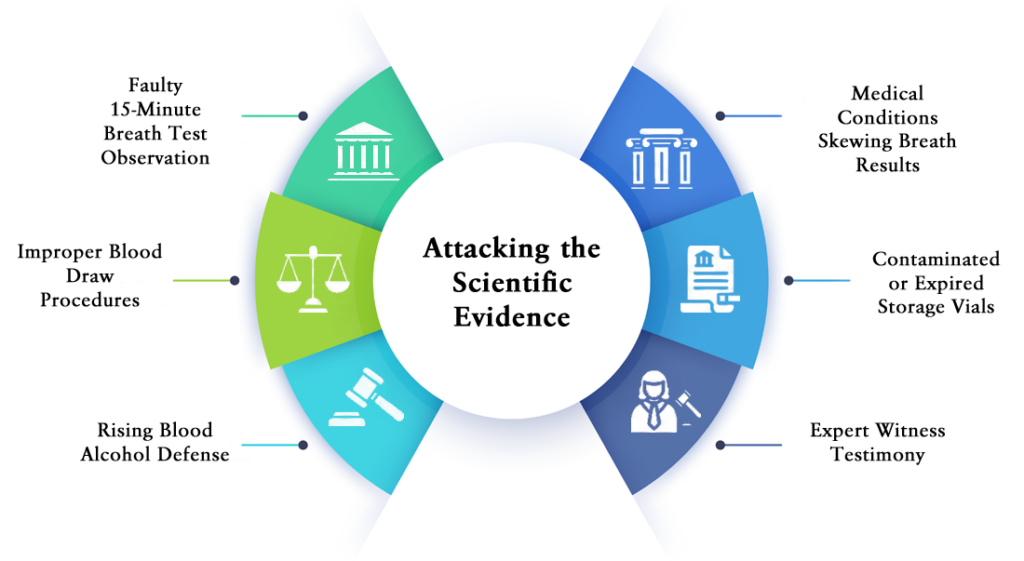
Attacking the scientific evidence is a defense strategy that seeks to show that the breath or blood test results used against a pilot are inaccurate or unreliable. Because the legal limit for pilots in Oklahoma is a very low 0.04%, even a tiny technical error can lead to a wrongful conviction. One common way to challenge a breath test is to examine the 15-minute observation period required. If a pilot burps, hiccups, or has acid reflux during that window and the officer doesn’t restart the clock, mouth alcohol can travel from the stomach and trick the machine into giving a falsely high reading. Your lawyer can also argue that certain medical conditions or even high-protein diets can produce chemicals in the breath that the machine mistakenly identifies as alcohol.
When it comes to blood tests, your attorney will look for any mistakes made during the collection and storage process. The person drawing the blood must use an alcohol-free wipe to clean the patient’s arm. If they used a standard alcohol swab, it could contaminate the needle and artificially raise the test result. The lawyer will also check the vials used to hold the blood. These tubes must contain specific preservatives to keep the blood from fermenting. If the chemicals in the tube are expired or weren’t mixed properly, the blood can actually create its own alcohol while sitting in the lab, making a sober person appear intoxicated on paper.
Your attorney might also use the rising blood alcohol defense to show that the pilot was actually sober while they were flying. Because it takes time for the body to absorb alcohol, a person’s level might be at 0.03%, while they are in the cockpit, but it could rise to 0.05% by the time they are tested an hour later at the police station. By hiring a scientific expert to work backward from the test time, a defense attorney can argue that the pilot was not under the influence during the only time that legally matters: when they were operating the aircraft. If any of these scientific points can be proven, a judge may rule that the test results are inadmissible, which often leads to the entire case being dropped.
Alternative Explanations
Presenting alternative explanations is a strategy used to show that the physical signs an officer interpreted as signs of intoxication were actually caused by the unique environment of flying or by a pilot’s medical history. Since Oklahoma’s general impairment law allows an arrest if a pilot simply appears under the influence, a defense attorney must provide a non-criminal explanation for symptoms such as slurred speech or bloodshot eyes. One of the most common explanations is pilot fatigue or jet lag. According to FAA safety studies, being awake for 17 to 19 hours can impair a person’s coordination and reaction time as much as having a 0.05% blood alcohol level. A lawyer will use flight logs and duty time records to show that a pilot was simply exhausted from a long-distance flight or a multi-day shift, which is a safety issue but not a criminal one.
Another powerful explanation involves the physical effects of high-altitude flight, such as hypoxia or dehydration. Hypoxia occurs when a person’s brain doesn’t get enough oxygen, and its symptoms, confusion, poor judgment, and fumbling with controls, are almost identical to alcohol impairment. An aviation medical expert might explain to a jury how a minor cabin pressure issue or a long flight at high altitudes can make a perfectly sober pilot appear intoxicated during a post-flight inspection. Similarly, the pressure changes in a cockpit can affect a person’s inner ear, causing vertigo or dizziness. If an officer asks a pilot to perform a walk-and-turn test on a windy tarmac immediately after they land, the lawyer can argue that any stumbling resulted from natural inner-ear imbalances rather than from alcohol.
Additionally, a pilot with chronic acid reflux can have mouth alcohol that travels from the stomach to the mouth, tricking a breathalyzer into a false positive. Even a strict low-carb keto diet can cause the body to produce isopropyl alcohol on the breath, which some older breath-testing machines in Oklahoma cannot distinguish from drinking alcohol. By presenting these alternative scientific and medical facts, reasonable doubt can be created in the minds of the jury.
Defending Yourself Against the Charges
While the stakes in Oklahoma are undoubtedly high, it is important to remember that a charge is not a conviction.
The Edge Law Firm is battle-tested and will aggressively dismantle the state’s case by scrutinizing every technical and procedural vulnerability in the investigation. The firm does not take the state’s scientific evidence at face value. From challenging testing methods to exposing mistakes by law enforcement and weaknesses in the evidence, The Edge Law Firm develops a powerful alternative narrative that establishes reasonable doubt.
Furthermore, The Edge Law Firm acts immediately to help protect a pilot’s federal airman certificates, the licenses that prove their qualifications to fly, and their medical certificates, the mandatory health clearances required to remain in the cockpit. By addressing the complex overlap between Oklahoma criminal law and Federal Aviation Administration (FAA) regulations, the firm helps pilots understand and comply with critical reporting obligations. This includes managing the requirement to report certain motor vehicle actions to the FAA within 60 days and guiding pilots through the high-stakes process of maintaining or restoring their FAA medical certification.

The Aviation Defense Team — Bruce Edge & Gary Trichter
Facing an FUI and potential FAA consequences, The Edge Law Firm builds a powerful defense for pilots by bringing together highly skilled professionals. Bruce Edge leads the litigation. He is the author of numerous Oklahoma DUI and criminal defense books, Dean Emeritus of the National College for DUI Defense, and a board-certified DUI defense attorney with the scientific and forensic expertise to dismantle the State’s evidence. Known for his relentless courtroom advocacy, he has sued the State of Oklahoma and won, helping thousands of drivers regain their ability to operate a motor vehicle. His track record and reputation in the legal community are built on a singular focus: stopping at nothing to position cases for dismissal or acquittal.

At the same time, Bruce Edge brings in “top gun” Gary Trichter, a pilot and impaired-driving defense attorney who focuses on FUI cases and related challenges with the FAA. Trichter applies his thousands of flight hours and deep knowledge of Federal Aviation Regulations to help achieve the best possible outcome: no conviction and no permanent record. He knows more about flying-under-the-influence cases than most attorneys in the courtroom, which allows him to spot issues others may not even recognize. He also understands how to approach the FAA strategically, helping protect not just the criminal case but a pilot’s certificate and career. In many ways, he brings the perspective of a defense attorney, an expert witness, and a pilot working together in one defense.
This synergy ensures that every legal move in the criminal case is structured to avoid a career-ending mistake or the consequences of a false accusation. By bridging forensic science and aviation law, they deliver a defense strategy that is technically persuasive and strategically designed to produce outcomes that help keep pilots in the air and never grounded.
Schedule a Free Case Evaluation
For those caught in the crosshairs of an arrest or investigation, The Edge Law Firm offers a free legal case evaluation. These evaluations typically last between 30 minutes and an hour and are fully protected by the attorney-client privilege. This confidential consultation serves as a vital shield, protecting legal rights and reclaiming the initiative from the state. The firm uses this time to record testimony and deliver decisive legal counsel that leaves no room for error. The team moves with speed to secure critical evidence before it can be suppressed, strengthening your defense. They perform a sophisticated audit of the prosecution’s case, exposing constitutional violations and investigative lapses. Based on this ironclad review, Edge Law Firm constructs a preliminary defense strategy designed to force a dismissal. The client then receives a clear, upfront quote for legal representation, with the shared objective of achieving the best possible outcome.
A Simple Process to Getting Started

Schedule a Free Case Evaluation
Schedule your free and confidential consultation with The Edge Law Firm in person, online, or over the phone. Click here to schedule your case evaluation.

Meet Our Defense Team
During your free case evaluation, you’ll have the opportunity to ask legal questions, receive professional advice, share your side of the story, and begin gathering evidence. This consultation can help you explore options and defense strategies you may not have considered and give you the peace of mind to rest easier tonight.

Start Defending Your Case
After your free case evaluation, The Edge Law Firm will provide a personalized quote for representation and begin protecting your rights immediately, with the goal of achieving a dismissal, reduction, or acquittal.