
Solicitation of Prostitution in Oklahoma
Estimated Read Time: 14-15 minutes
Key Takeaways:
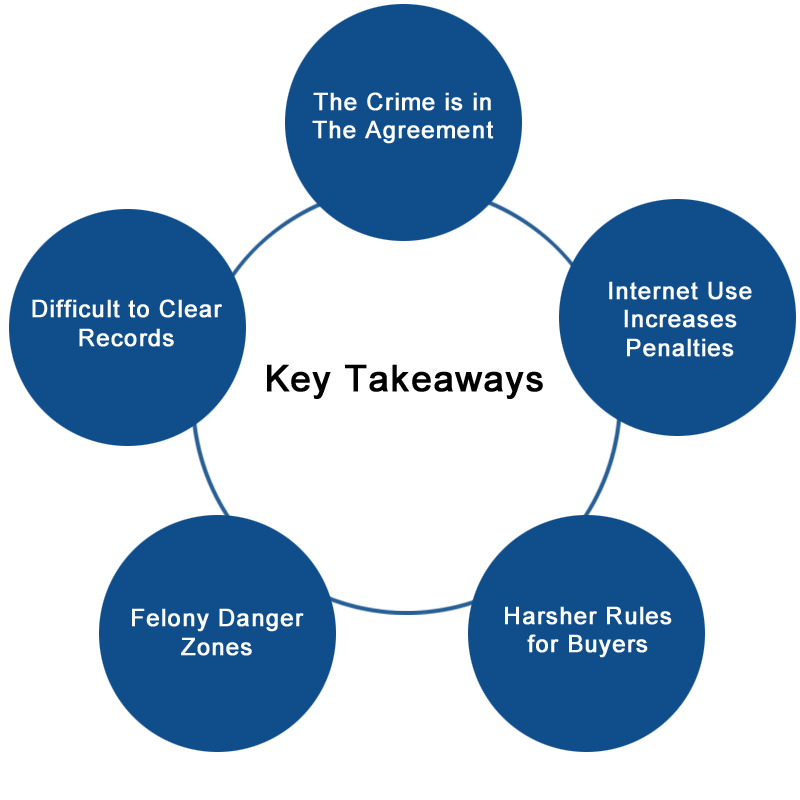
- The Crime is in The Agreement: You can be arrested as soon as you agree to trade money for a sexual act, even if no cash is handed over and no physical contact ever happens.
- Internet Use Increases Penalties: Using the internet to arrange sex or posting reviews of sexual services online can turn a minor case into a serious felony with mandatory prison time.
- Harsher Rules for Buyers: Oklahoma uses a “Demand Reduction Model” that targets the buyer with unique punishments not given to sellers, such as taking away their driver’s license for repeat offenses.
- Felony Danger Zones: A standard misdemeanor charge immediately becomes a felony if the solicitation happens within 1,000 feet of a school or church, or if it involves a person under 18.
- Difficult to Clear Records: While victims of trafficking can clear their records quickly, buyers must follow a much slower and more expensive process that requires waiting years after their case is finished.
In Oklahoma, solicitation of prostitution is when one person offers money or something of value to another person in exchange for a sexual act. This crime does not require any physical contact or cash exchange, the crime occurs the moment a deal or agreement is made. The state views the intent and the offer as the completed crime, regardless of whether the sexual act ever takes place. This includes not only face-to-face offers but also communications made through text messages, dating apps, or websites. If it happens within 1,000 feet of a school or church, or if it involves a minor, serious punishment can be applied.
The Difference Between Prostitution and Solicitation
In Oklahoma, the state views solicitation and prostitution as two sides of the same coin. Still, the law uses different terms to distinguish between the buyer and the seller. While the state views both the buyer and the seller as breaking the law, the state uses different terms and focuses to distinguish between their roles. Prostitution typically refers to the person who is offering to perform a sexual act in exchange for money. In contrast, solicitation refers to the person who is offering to pay for that act. The most significant difference is that solicitation is often called a verbal crime because it focuses on negotiation. You can be arrested for solicitation the moment the deal is reached, even if no money is exchanged and no physical contact occurs. Prostitution is a broader term that covers the actual performance of the sexual act for hire. As of 2026, both crimes are usually treated as misdemeanors for a first offense, carrying a maximum of one year in jail and a $2,500.00 fine.
For a standard first-time offense for prostitution, the seller usually faces a misdemeanor charge. However, the seller faces a specific felony risk that the buyer does not: if they engage in prostitution while knowingly infected with HIV, they can be sentenced to up to five years in prison.
While the buyer, often called a john, faces the same basic penalties for a first offense as the seller, recent changes to the law have created unique penalties that target the buyer in an effort to slow and reduce the demand that fuels the sex trade. While both individuals can be charged with a misdemeanor for a first offense, the consequences for the john become significantly more severe as part of the state’s updated 2026 legal framework. This includes harsher penalties for aggravating factors. This strategy is called the Demand Reduction Model, which is based on the idea that the best way to stop prostitution is to take away the money by making the risks for the buyer much higher. There are several specific ways the buyer faces harsher or more unique penalties than the seller.
For example, if a buyer uses an app or website to try to buy sex from a minor, they face a serious felony charge with up to 15 years in prison and mandatory sex offender registration. In these cases, the law often views the seller as a victim of human trafficking and focuses all criminal punishment on the buyer who fueled the demand.
One significant difference is how the state handles driving privileges. While both buyers and sellers can face jail time for a misdemeanor, only the buyer faces a specific punishment for repeat offenses that affects their daily life. A person convicted of a third or subsequent offense for patronizing a prostitute faces the mandatory revocation of their driver’s license. This penalty is designed to hit the buyer’s lifestyle, a consequence that is generally not applied to those selling the services.
Additionally, Oklahoma uses unique felony charges to target the way buyers use technology to find and rate services. It is a Class B4 felony for a person to post evaluations or reviews of prostitution services online. This law targets the buyer community specifically, treating the act of sharing information about buying sex as a serious felony that can lead to up to three years in prison and increased financial penalties.
The most significant difference in treatment is seen in how each group can clear their criminal record. Oklahoma law recognizes that many people selling sex are actually victims of exploitation. Because of this, if sellers can prove that they were victims of human trafficking, they can have their records cleared immediately after their case is resolved. Buyers, however, are seen as the demand that fuels crime and are not given this kind of help. Instead, buyers must wait several years and follow the standard, slower process to apply to expunge their records.
While the basic jail time and fines might look similar at first, Oklahoma goes out of its way to make life more difficult for the buyer. The state’s goal is to make the act of buying sex so risky that people will stop doing it. By focusing on the john, the state hopes to dry up the money that keeps the illegal sex trade running.
The Demand Reduction Model
In Oklahoma, the Demand Reduction Model is a strategy that focuses on stopping prostitution by targeting the source of the demand, the person trying to buy sex, rather than just the person selling it. The idea is that if there are no buyers, the market for prostitution and human trafficking will disappear. The Demand Reduction Model is built into Oklahoma law through several layers of punishment and education.
The state uses several methods to discourage buyers, including harsher penalties in specific areas. While first-time solicitation is usually a misdemeanor, the law creates zones where the crime is automatically a felony. For example, if a buyer tries to negotiate a deal within 1,000 feet of a school or church, the charge becomes a felony punishable by up to 5 years in prison. New Recent legislation also targets the digital community by making it a Class B4 felony to post reviews of prostitution services on prostitute rating websites. This is designed to break the online networks where buyers encourage each other.
Furthermore, many Oklahoma counties like Tulsa require John Schools as a condition of plea deals. These are court-mandated classes where buyers must pay a high fee to learn about the dangers of the sex trade and hear from victims of trafficking. The fees for these classes are often used to fund rescue services for exploited people. The most aggressive part of the model is that if a buyer solicits a minor, they are charged with a Class B1 felony, resulting in 10 to 15 years in prison and permanent sex offender registration. In these cases, the law often treats the child as a victim who cannot be charged, placing 100% of the criminal responsibility on the buyer.
Finally, the state applies the 85% Rule to the most serious related crimes. If you are convicted of a high-level felony like Human Trafficking or Child Sex Trafficking, you will likely have to serve at least 85% of your prison sentence before becoming eligible for parole consideration. This ensures that those fueling the most extreme forms of demand or exploitation spend the vast majority of their sentence behind bars without the possibility of early release.
Scope of Sexual Conduct
The definition of sexual conduct as related to solicitation is an inclusive definition and covers almost any sexual act performed for money. This includes acts such as traditional sexual intercourse, oral sex (also referred to as fellatio or cunnilingus), anal sex, and masturbation. It also includes a catch-all category called lewdness, which refers to any indecent or lustful act done for sexual gratification. For a charge to stick, the prosecutor must prove that you intended to pay for or receive payment for these acts. The crime is complete as soon as an offer or agreement is made. The prosecution will not have to prove that the sexual act actually happened or that any physical contact occurred.
Pandering or Procurement
While solicitation involves a single deal between a buyer and a seller, Pandering and Procurement are related crimes that will draw much more serious felony charges for the person running the operation. Pandering focuses on the person who uses promises, threats, or trickery to convince or force someone to start or continue working in prostitution. It is a major felony with a prison sentence of 2 to 20 years and fines of up to $9,000.00.
Procurement, on the other hand, targets the manager or facilitator responsible for logistics. This includes anyone who provides a room or a vehicle for prostitution, transports someone to a date, or knowingly takes a cut of the money earned from prostitution. According to rule updates on January 1, 2026, procurement is a felony punishable by up to 5 years in prison and fines of up to $15,000 for repeat offenders. Essentially, a panderer is the one who brings people into the trade, while a procurer is the one who provides the tools and location to keep the business running. Both pandering and procurement face much harsher consequences than the individual buyers or sellers, because they profit from the exploitation of others.
Digital Buyers or Johns
In Oklahoma, a digital john is a person who uses computers, smartphones, or the internet to arrange for or evaluate the purchase of sexual services. Under new laws effective in January of this year, being a digital john is often more dangerous than traditional street solicitation from a legal standpoint. Oklahoma treats these people with harsher punishments than someone who is arrested on the street because the internet allows the sex trade to reach more people and spread more quickly. The state has created specific felony categories for online activity. One of the most severe charges involves a buyer using a rating or review website. It is a felony for any buyer to post a review or a rating of a sexual encounter on a website that promotes or initiates sexual conduct.
Even if the actual solicitation was just a misdemeanor, the act of posting about it online typically carries a mandatory prison sentence of at least three years and a fine of up to $20,000.00. This includes actions such as sharing prices, descriptions of the person, or tips for other buyers. It also includes anyone who uses technology to facilitate or offer to pay for sex. If it involves a minor or a person the buyer believes to be a minor, it can result in up to 10 years in prison.
The Moment the Deal is Made
When committing solicitation of prostitution, the crime occurs at the moment an agreement is reached between the buyer and a seller. If a sting operation is underway, your mere words and actions to initiate a deal are enough to provide evidence for an arrest. It does not matter whether money is exchanged or physical contact occurs. Undercover officers are trained to wait for this exact moment because it proves the person had specific intent and a clear plan to trade money for sexual acts. Law enforcement sometimes refers to this moment as the magic moment.
For this moment to occur, the conversation must clearly show three things: a specific sexual act must be mentioned, a price must be agreed upon, and the suspect must give a clear and affirmative yes to the deal. Officers are careful to let the suspect be the one who suggests the price or the sexual act first. They do this specifically to protect the case against an entrapment defense, which your attorney would use to show that the police pressured or tricked a normally law-abiding person into committing a crime. By waiting for the involved parties to make the offer, the police can prove in court that the person was ready and willing to break the law on their own.
This moment is critical because it acts as a point of no return. Since solicitation is a crime based on the agreement itself, the police can signal for an arrest the instant those words are spoken. This evidence is usually captured on a hidden recording device, which makes it very difficult for a person to claim later that they were just joking or didn’t really mean it. In Oklahoma, once the deal is recorded, the state has everything it needs to move forward with a criminal charge.
 Consequences of a Solicitation of Prostitution Charge

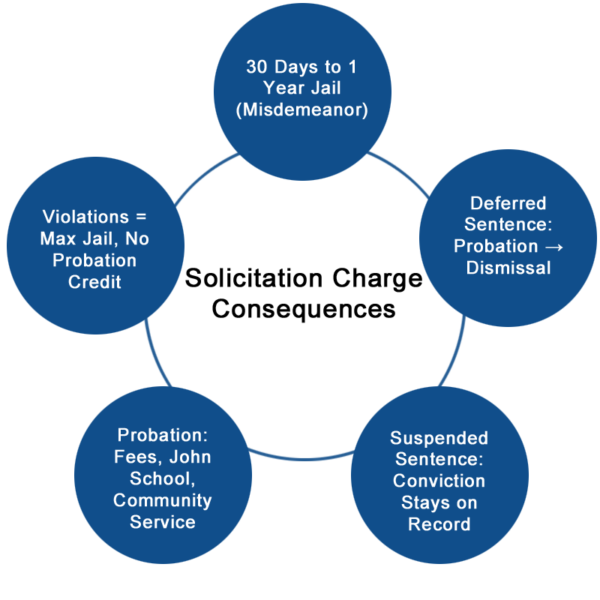
In Oklahoma, the amount of jail time you can expect for a solicitation of prostitution charge usually depends on several factors, including your criminal history and the specific location of the arrest. While the law sets a range of 30 days to 1 year for a standard misdemeanor, the actual time spent behind bars is often determined by the type of sentence the judge imposes.
For a standard first-time misdemeanor offense involving an adult, the law requires a mandatory minimum of 30 days in county jail, with a maximum of one year. However, many first-time offenders do not serve the full sentence in jail. Instead, judges often use a deferred sentence. A deferred sentence is a second chance offered by the court to help you avoid a conviction on your permanent record. To receive a deferred sentence, you must admit your guilt to the judge, who will then wait a specific period before sentencing. Instead of being sent to jail, the judge will put you on probation for one to two years.
A judge might also offer you a suspended sentence, which involves a conviction but allows you to remain free as long as you follow the rules of your probation. This is different from a deferred sentence because it will not result in a dismissal. A suspended sentence is akin to a jail sentence on hold, leaving a permanent mark on your background check but allowing you to stay at home and keep your job.
While these options might seem like a get-out-of-jail-free card, there are many things to consider when entering into agreements with the court. The terms of your probation will be strict. They will include base mandates such as staying up to date on your court fees, committing no additional crimes, completing community service, and any extra classes and requirements set by the judge. This can often include John School, a court-mandated class to educate participants in the harsh realities of the sex trade. Once you have completed the terms of your deferred sentence successfully, the judge will erase your original guilty plea, change it to not guilty, and then dismiss the case entirely.
However, this opportunity will vanish if you break even one rule. If you miss a payment or fail a drug test, the judge can skip the rest of your waiting period and find you guilty. The judge might even then sentence you to the maximum one year of jail time allowed for a misdemeanor. There is no guarantee that you will receive credit for the time spent on probation. For example, if you fail during the final few months of your probation, you might still receive the full sentence.
For many people, this risk is a fair trade for the opportunity to have their records cleared and removed from public court websites. If you complete your deferred sentence without issue, after another year, you can apply for a complete expungement to hide the arrest record as well. If you receive a suspended sentence, it will be harder and take longer to clean your record. Instead of one year, you must wait five years after your sentence is completed before you can request that a judge seal the record through an expungement.
Probation
A deferred or suspended sentence for solicitation of prostitution comes with a strict set of rules that you must follow exactly to avoid a permanent conviction. The court will give you a specific set of requirements as a part of your rehabilitation. This will include John School, 40 to 80 hours of unpaid community service, and payment of all court fees and fines, including a monthly $40.00 supervision fee for your community service officer. It might also include a mandatory health examination.
Your daily freedom will be restricted. You will be required to maintain a full-time job or be a full-time student, and you are forbidden from leaving Oklahoma or changing your home or job without getting written permission from your officer at least 10 days in advance. You must agree to random drug and alcohol tests at your own expense and allow your officer to walk into your home or search your car at any time without a warrant to look for contraband or evidence of a crime.
The rules also control who you talk to and what you own. You will be strictly prohibited from possessing any firearms or weapons, and you cannot spend time with anyone who has a felony record or is also on probation. You must answer every question your officer asks truthfully and avoid any disreputable places like bars or areas known for drug use, and report any contact with the police within 72 hours.
Even a minor infraction can lead to the prosecution to file a Motion to Accelerate. This allows the judge to end your probation, find you guilty immediately, and send you to jail for up to a year without giving you any credit for the time you already spent on probation. While on probation, your life is entirely under the court’s control. If you follow every single one of these rules perfectly, the case will be dismissed, and your name will be removed from public court websites, but any slip-up can turn your probation into a permanent jail sentence.
Mandatory Health Reporting
Mandatory health reporting is a specific requirement that connects a criminal conviction for solicitation or prostitution to the state’s public health system. This public health measure is a hidden social consequence that ensures health officials record your name.
Once convicted of solicitation or patronizing, you will be required to notify the county superintendent of public health of that conviction. This notification will happen automatically as part of the sentencing process. The purpose of this law is to allow health officials to track potential outbreaks of sexually transmitted infections. Still, it also means that your criminal case is shared with a second government agency, creating a permanent health-related record that is separate from your standard police file.
In addition to this notification, once convicted, the state will require you to undergo a mandatory medical examination. If you test positive for a sexually transmitted infection, you might be required to undergo treatment as a condition of your release or probation. It is a crime for an infected person to refuse to report their status or to fail to submit to the required examination and treatment.
In some Oklahoma counties with populations over 400,000, the law requires that $100.00 from each solicitation fine be sent directly to the city-county health department. This ensures that the health department has the funding to maintain its records and oversight. Because government health officials handle these reports, they are generally protected by privacy laws like HIPAA, but the notification itself creates a paper trail documenting your conviction.
Community Service
Community service is likely to be a mandatory element of your sentence. The law requires that, for a first-time misdemeanor offense, you must complete between 40 and 80 hours of unpaid community service. The judge will determine how long you have to complete your community service, which can range from 90 days to the full length of your probation.
The process of completing these hours is highly regulated. Once you are sentenced, you are typically referred to a Community Service Coordinator through the court or the District Attorney’s office. You will not be allowed to volunteer just anywhere. The organization where you complete your hours must be a registered 501(c)(3) non-profit or a government agency, such as a public library, a local food bank, or an animal shelter. Most organizations that work with children, such as schools or youth centers, will not accept volunteers with solicitation or sex-related charges on their record, so your options are often limited to physical labor, maintenance, or administrative tasks for groups like the Regional Food Bank of Oklahoma or Habitat for Humanity.
If you fail to finish the required hours within the timeframe set by the judge, it will likely be considered a probation violation. This can trigger your being sent to jail to serve your original one-year sentence. To prove you have done the work, you must maintain a time log signed by a supervisor at the non-profit, which is then submitted to the court clerk as official proof of completion.
John School
John School, or the Prostitution Prevention Program, is a specialized education class designed as a wake-up call for people who have been arrested for trying to buy sex. This program is a central part of a strategy to decrease the demand for illegal sex work by educating people on the legal, health, and human costs of their actions. For most first-time offenders, attending John School is required to receive a deferred sentence. If you are ordered to attend and you fail to complete the program, it is considered a violation of your probation.
The program is an intensive seminar that can last 8 to 15 hours. Depending on where you are sentenced, it can be held in person or, in some jurisdictions, through a court-approved online platform. During the class, you will be required to listen to a variety of experts, including health professionals who discuss the high risks of spreading STIs and HIV, and police officers who explain the legal penalties of vehicle seizure and driver’s license loss. One of the most impactful parts of the program is the victim impact panel, where survivors of human trafficking share their stories to show that many people in the sex trade are not there by choice but are being forced or manipulated by others. You will be responsible for paying the program fee, which typically ranges from $500.00 to $1,000.00.
 Fines and Fees
In Oklahoma, a solicitation of prostitution initiates a wave of financial obligations that extend far beyond the basic fine. As a part of your sentence, you can expect a financial package that includes statutory fines, mandatory court costs, administrative fees, and secondary costs for diversion programs or record sealing.
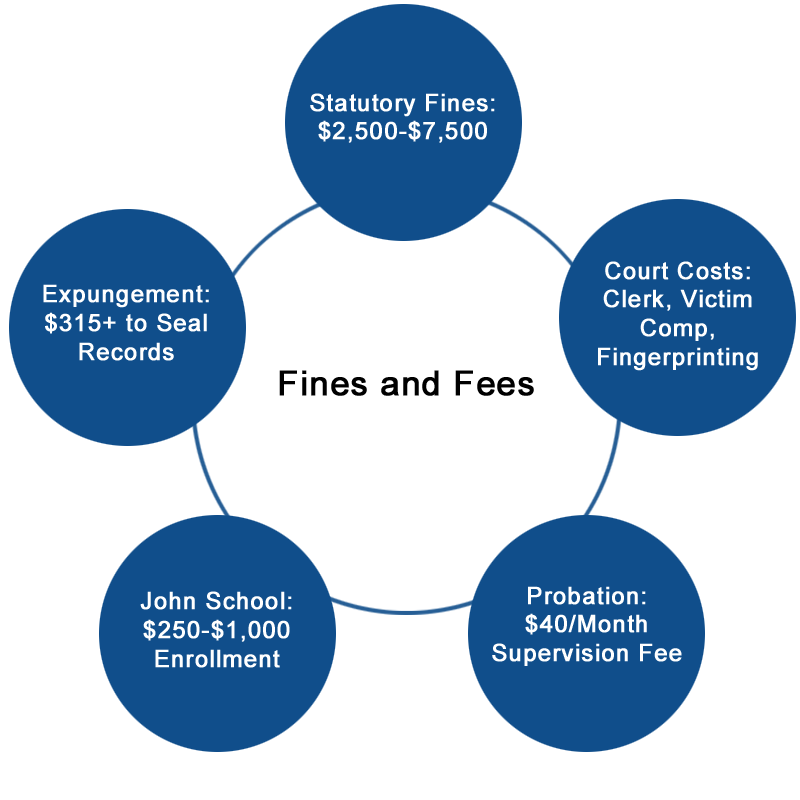
The most visible cost is the statutory fine. For a first-time misdemeanor conviction, the judge can impose a fine of up to $2,500.00. If you are convicted a second time, this maximum doubles to $5,000.00, and a third or subsequent offense can reach $7,500.00. It is important to note that these figures are just the base punishment fines and do not include the administrative costs you will be expected to pay.
On top of the fine, you will have to pay a series of court costs and assessments. These typically include a $100.00 court clerk fee, a victim compensation assessment that ranges from $50.00 to $100.00, and various smaller charges for law enforcement training and automated fingerprinting. If you are placed on supervised probation, you will also be required to pay a District Attorney Supervision Fee, which is usually $40.00 per month for the duration of your probation. If you are required to enroll in a John School, the enrollment fee typically ranges from $250.00 to $1,000.00.
Additionally, there are high secondary costs if you choose to clear your record. To begin the expungement process, you must pay $15.00 to the Oklahoma State Bureau of Investigation for a criminal history report. Once a judge signs an expungement order, the OSBI charges a $150.00 administrative fee to actually seal the records. Many local police departments, such as those in Oklahoma City or Tulsa, charge an additional $150.00 processing fee to seal their own internal arrest files. Between base fines, monthly probation fees, program costs, and eventual expungement fees, a solicitation charge can easily cost a first-time offender $4,000.00 to $6,000.00.
Misdemeanor to Felony and Increased Penalties
In Oklahoma, increased penalties for solicitation apply when certain additional factors elevate a misdemeanor to a serious felony. The most common way charges are elevated is when the crime is committed near protected locations. For example, if you are caught soliciting within 1,000 feet of a school or a church, the charge is upgraded to a felony. This can lead to five years in state prison instead of just one year in county jail. Your health status will also play a major role, as anyone who tries to buy or sell sex while knowing they have HIV faces a felony charge that also carries up to five years in prison.
If the crime occurs in the digital sphere, there are additional penalties. If you post a review or a rating of a sexual encounter on a website that encourages the sex trade, you can be charged with a felony punishable by up to three years in prison.
The most severe increases happen if the person being solicited is a minor. Soliciting a child under the age of 18 is a grave felony that carries a mandatory minimum of 10 years and a maximum of 15 years in state prison. This action will also trigger the 85% Rule, meaning you will have to serve at least 8.5 years before you can even ask for parole.
Additionally, using a phone or a computer to talk to someone you believe to be a minor about sex is a separate felony that can result in 10 years in prison. This will require you to register as a sex offender for a minimum of 25 years.
Shame Laws
Shame laws are a combination of rules and police measures designed to use public embarrassment as a tool to stop people from buying sex. These practices are part of a strategy to reduce the demand for prostitution by making the social cost of an arrest, such as losing your reputation or your car, much higher than a simple court fine. There are four main ways these shame tactics are used against those arrested for solicitation.
Under the Oklahoma Open Records Act, information about an arrest is considered public property. This means that police departments in cities like Oklahoma City and Tulsa can legally post sting results on social media, often sharing mugshot galleries and the names of everyone arrested. This creates a permanent digital footprint that your employers or family members can find for years.
These laws also include specific reporting requirements that create a government record of the offense. When someone is convicted of solicitation, the court must notify the county health department. This will link your name to a crime that is associated with a public health risk. If your crime involved a car, the police can use civil forfeiture laws to seize your vehicle.
For the most serious cases, the ultimate form of shaming is mandatory registration with the sex offender registry. This will put your name, photo, and home address on a searchable public map for at least 15 years. This level of disclosure ensures that the conviction remains a visible part of life in your neighborhood.
Expunging Your Record
Clearing your record for a solicitation charge is a detailed process that involves two different legal steps to ensure your mistake is hidden from both background checks and the general public. The first step is a Section 991c expungement, which is only available if you completed a deferred sentence. This step is a relatively quick option. Once a judge signs the order, the court clerk physically scratches out your name from the public court docket and removes the case from the public Oklahoma State Court Network website. While this makes the case appear to be a dismissal to anyone searching online, it does not remove the arrest record from the Oklahoma State Bureau of Investigation’s files. It will still show up on a police background check or a detailed job screening.
To fully seal the record so that even the arrest is hidden, you must complete a Section 18 expungement. This action has a strict timeline. If your case was dismissed after a deferred sentence, you must wait one year after the dismissal before you can apply, but if you were convicted and given a suspended sentence, you must wait five years after your probation ends and have no new crimes on your record. This is a formal civil lawsuit, and you must notify the OSBI, the District Attorney, and the arresting police department. It involves various costs, including a court filing fee of about $164.00, an OSBI processing fee of $150.00, and potentially an additional $150.00 fee depending on the department that arrested you.
Oklahoma recently enacted the Oklahoma Clean Slate Law, which has begun implementing automatic expungement for certain eligible records, and the OSBI is now required to identify eligible cases monthly and notify prosecutors. If no one objects within 45 days, the record can be sealed without you having to file a petition or hire a lawyer. However, because this system is new, many people still choose to file a traditional petition to ensure their record is cleared as soon as they reach the one- or five-year waiting period.
Oklahoma Clean Slate Act
The Oklahoma Clean Slate Act automates the record-sealing process for individuals with particular criminal histories. As of January 1, 2026, this law is officially in effect, meaning the state is now using a computer-driven system to identify and seal eligible records without your having to hire a lawyer or file a court petition. While the Clean Slate Act can provide a path to a second chance, the timing will depend entirely on the outcome of your case and whether it was your first offense.
If your solicitation case ended with a deferred sentence and was successfully dismissed, you might be eligible for automatic sealing under the Clean Slate Act. This eligibility begins exactly one year after the dismissal if you have no other felony convictions and no pending charges. If you were actually convicted of a misdemeanor, such as through a suspended sentence or jail time, the wait will be longer. In that case, the Act will automatically seal a misdemeanor conviction five years after the sentence is fully completed, as long as you have remained crime-free during that time. However, it is essential to note that the Clean Slate Act applies only to misdemeanors. If your solicitation charge was upgraded to a felony, the automatic system generally will not seal it until ten years have passed, and even then, certain violent or sex-offender-eligible felonies are excluded entirely.
Sex Trafficking
While charges like pandering focus on local operations, Human Trafficking laws are designed to punish the extreme exploitation of people both at the state and federal levels. Human Trafficking is often referred to as modern-day slavery and is a severe felony that carries much heavier penalties than simple pandering or procurement. The main difference is the use of force, fraud, or coercion. For example, this can include acts such as threatening someone, taking away their ID, or using debt to trap them into forced sexual acts. In Oklahoma, a human trafficking conviction requires you to serve at least 85% of your sentence before you can even be considered for parole. If the victim is an adult, the penalty is 5 years to life in prison. If the victim is a minor, the minimum sentence jumps to 15 years, and the law automatically assumes it is trafficking even if no force was used.
Federal laws will often take over if the crime involves moving someone across state lines or using the internet to arrange the exploitation. Federal prosecutors do not have to prove that anyone crossed a border if a minor is involved, just the act of obtaining or maintaining a minor for commercial sex is enough for a federal trafficking charge. The penalties in federal court are even more intense, with a mandatory minimum of 10 to 15 years and a maximum of life in prison. While state pandering charges focus on the person recruiting for a local business, trafficking charges target the denial of freedom and the methods of control used over the victim.
Oklahoma law provides a unique fast track for sellers who can prove they were victims of human trafficking. These individuals do not have to wait years to clear their name. They can petition the court for an expungement immediately after their case is resolved, provided they show that the prostitution-related offense was a direct result of being trafficked.
Solicitation of Prostitution FAQ’s
- Will I go to jail? It depends. Most first-time offenders avoid jail by getting a deferred sentence. You stay home but must follow strict rules. Our goal is to make certain you don’t go to jail.
- Is solicitation of prostitution a felony? Yes, in the majority of cases. Oklahoma has some of the strictest laws in the country regarding the solicitation of prostitution. While it was historically a misdemeanor for a first offense, recent legislative shifts have made it much easier for “Johns” to face felony charges.
- What if I didn’t pay? You can still be charged. The agreement to trade money for a sex act is the crime, you don’t have to actually hand over cash to be arrested.
- How do I clear my record? Cleaning your record is a two-step process. First, you get the court to hide your name online once probation ends. One year later, you can apply to have the arrest record itself sealed.
- What is “John School”? It is a mandatory class on the dangers and legal risks of the sex trade. You must pay for and finish this class to successfully complete your probation and get your case dismissed.
- If I am convicted of Solicitation of Prostitution in Oklahoma, will I have to register as a sex offender? In Oklahoma, a conviction for solicitation of prostitution generally does not require sex offender registration when the offense involves two consenting adults and is charged as a misdemeanor. However, registration becomes mandatory if certain circumstances are present. This includes situations where a minor is involved or where the person believed they were soliciting a minor, such as in an undercover sting, which can result in registration for 25 years to life. Registration is also required if the offense is connected to human trafficking or exploitation, or if technology such as a phone or computer was used to solicit a minor, which is treated as a registrable felony.
Sting Operations Conducted by Law Enforcement
Undercover stings and decoy operations are carefully planned traps set by the police to catch people trying to buy or sell sex. Many of these operations start online, where officers post fake advertisements on popular websites to lure in buyers. When you call or text the number in the ad, an undercover officer pretends to be a provider and talks to you until you explicitly agree to a specific sexual act and a specific price. Most of these stings lead you to a hotel room outfitted with hidden cameras and microphones. Once you enter that room and confirm the deal by showing your money or repeating what you want, a team of officers waiting nearby will burst in to arrest you.
Many people think these operations constitute entrapment. Such acts are only entrapment if the police forced or tricked an innocent person into doing something they never would have done otherwise. For example, if you were the one who chose to call the ad and drive to the hotel, the court will usually see that as proof that you were already willing to break the law. The prosecution will use the hotel video and the text messages from your phone to prove that you intended to commit the crime. If the sting involves an officer pretending to be a minor, the penalties instantly increase in severity, rising to a felony carrying a mandatory prison sentence of 10 to 15 years. As child prostitution is considered a heinous crime, you would also fall under the 85% Rule, meaning you will have to serve at least 8.5 years of that time before being eligible for parole.
Digital Forensics and Evidence Extraction
Digital forensics and evidence extraction are high-tech methods used by the police to turn your smartphone and internet history into a roadmap of your intent to buy sex. Once the police seize your phone, they will send it to specialists for a physical data extraction. This process can recover things you thought were gone forever, such as deleted text messages, a cleared browser history, and even hidden location data that shows exactly where you were driving. Law enforcement will use this information to prove that you didn’t just stumble into a situation but were actively searching for it online long before you were caught.
The prosecution also uses these tools to find aggravating evidence that can turn a simple misdemeanor into a much more serious crime. For example, if they see that you were using technology to communicate for a sexual act or desire with someone you believed was a minor, you can be charged with a felony that carries up to 10 years in prison and a $10,000.00 fine. The law is very strict about how this evidence is handled. The prosecution is legally required to share a copy of this forensic report and the raw data with your lawyer. This ensures you have a chance to review the same evidence they have and check for any mistakes.
Challenging Digital Evidence
In Oklahoma, a lawyer defends against digital evidence by proving that the technology or the people using it made a mistake. Your attorney might focus on attacking the chain of custody, which is the official record of everyone who touched your phone. For example, if the police didn’t lock the phone in a secure bag to block remote signals or if they left it in an insecure room, your lawyer will argue the data could have been tampered with or corrupted. Your lawyer will also challenge the intent of your messages by claiming they are being taken out of context. For example, if you mentioned meeting for a gift, the prosecution might say that means paying for sex, but your lawyer will argue it was a vague discussion that doesn’t prove a crime beyond a reasonable doubt.
To find these mistakes, a defense lawyer will often hire an independent digital forensic expert. These private experts typically charge between $250.00 and $500.00 per hour, and a full review of a single smartphone can cost anywhere from $1,500.00 to $4,000.00 for a flat-fee analysis. These experts look for technical glitches, such as a ghost web history that you never actually clicked on or incorrect GPS timestamps that might place you at a different location. Additionally, if the police’s warrant only covered a search of texts from a specific day, but they instead looked at your private photos from years ago, your lawyer will file a motion to suppress that evidence. It will be your attorney’s goal to show the judge that the digital evidence is unreliable and to force the court to ignore the data and make the case against you fall apart.
Hardline Plea Bargaining
Hardline plea bargaining is a strategy employed by the prosecution to use high-pressure tactics to force a quick guilty plea, often before you and your attorney have had the time to review the evidence. The biggest tool they will use is the mandatory 30-day jail minimum sentence. In an effort to scare you, the prosecution might imply that if you go to trial and lose, you are guaranteed to spend at least a month in a county cell. To avoid this, they will offer you a deferred sentence, which allows you to serve probation and eventually have the case dismissed. This is likely to be accompanied by non-negotiable demands such as heavy fines, lengthy community service terms, and other harsher aspects of your sentence.
To increase the pressure, the prosecution will often use plea deals that will disappear if you don’t sign them at your very first court date. They might also use the threat of a felony upgrade to scare you. They will use these tactics to get you to admit guilt quickly so they don’t have to spend the state’s money on a trial, and they rarely back down on the requirement that you pay high fees and attend classes.
Countering Hardline Plea Bargaining
Your attorney will counter this behavior from the prosecution by using specific legal rules to slow down the case and show that the state’s evidence isn’t as perfect as it seems. Your attorney can file a Motion for Discovery, which legally forces the prosecutor to hand over all the evidence, such as body-cam video and phone data, before you have to choose their offer. To fight the threat of the mandatory 30-day jail minimum, your lawyer will build a mitigation package that includes character letters and proof of a steady job to convince the judge that you are a good person who made a one-time mistake. If you proactively enroll in counseling before being ordered to do so, it will give your lawyer more power to argue for a deferred sentence.
If the prosecution tries to upgrade your charge to a felony, your lawyer will investigate the claim to see if the circumstances of your crime apply to felony standards. By proving the prosecutor is bluffing, your attorney might get the charge lowered back to a standard misdemeanor. Finally, if the prosecutor is still not playing fair, your attorney might suggest a blind plea. This is a bold move: you admit to the crime directly to the judge, without a deal from the prosecutor. Since many judges are more focused on rehabilitation than punishment, they may give you a much lighter sentence than what the prosecutor was demanding. It will be an essential task for your lawyer to fight back against the prosecution’s scare tactics, prove you are a low-risk person, and find any mistakes in the police work to force the state to give you a better deal.
Blind Pleas
A blind plea is usually considered a last resort move for first-time offenders to counter a harsh prosecution. When you enter a blind plea, you are bypassing the prosecutor and betting that the judge will choose a lighter punishment. However, a blind plea is a risky proposition. Unlike a regular plea deal, where you can usually back out if the judge tries to give you a harsher sentence than the prosecutor recommended, with a blind plea, you generally cannot withdraw your plea just because you don’t like the judge’s decision. You will be stuck with whatever the judge decides, even if they give you the maximum jail time. It is also possible that if you enter a blind plea for a more serious charge, the judge might send you straight to jail that day to wait for your final sentencing hearing. A blind plea is like firing the prosecutor and putting your entire future in the hands of one judge. While it can be a great way to avoid a harsh prosecutor, it can also backfire if the judge decides to be tough that day.
 Preparing to Win
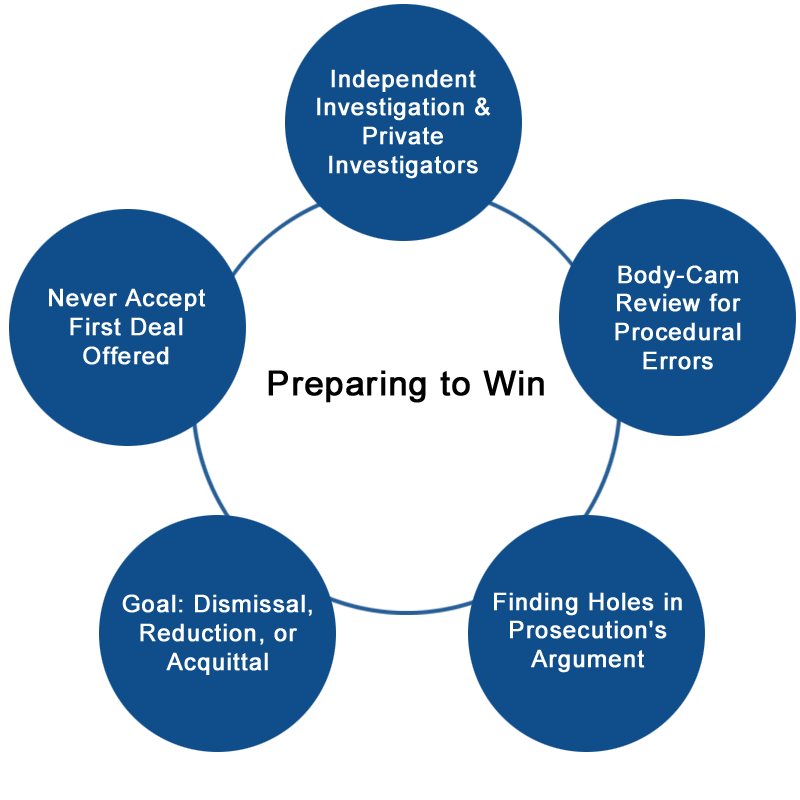
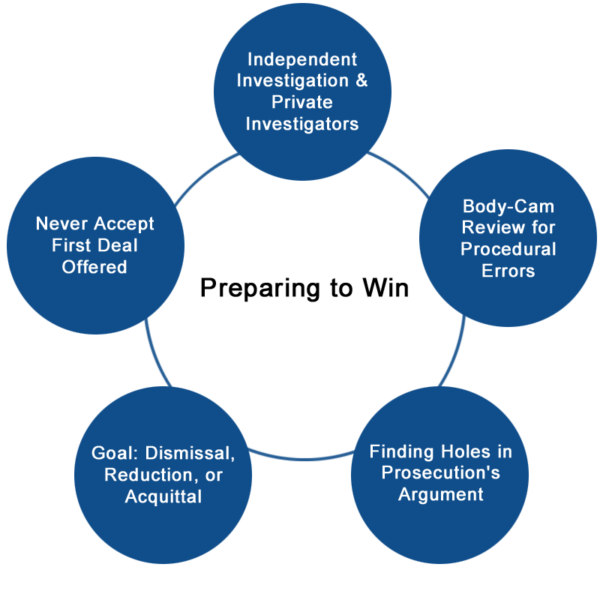
There is no such thing as an unwinnable case. The police and prosecution are not perfect. With Edge Law Firm, a strong defense means conducting a full-scale independent investigation, using private investigators to track down evidence and interview witnesses, and reviewing body-cam footage and surveillance videos to find those procedural errors. By finding the holes in the prosecution’s argument, you can take control of the narrative rather than letting the state define you by a single mistake.
Justice is the mission of the courts. Our mission at Edge Law Firm is to protect your career, your reputation, and your future by fighting to keep a felony and permanent criminal record out of your life and by achieving the best possible outcome. Our goal is to have your case dismissed, reduced, or acquitted.
Whether the battle happens at the negotiating table or in front of a jury, our focus is to present you in the best possible light while launching a strategic attack on the case against you. You should not gamble with your life by accepting the first deal offered. Instead, empower yourself with a legal team that has a proven track record of aggressively challenging the Oklahoma government and winning. Your life and livelihood are worth the fight.
Submit your contact information below to schedule a free, confidential case evaluation.
Please submit our secure contact form below: